7 Serious Reasons What Could Cause Overheating in a Car

jkram200 • September 16, 2026

An overheating engine needs quick attention. Pull over when it is safe, shut the engine off, and let it cool. Never open a hot radiator cap. Hot coolant can spray out and cause severe burns. AAA gives similar guidance for an overheating vehicle.


What could cause overheating in a car? Low coolant, a bad thermostat, a weak water pump, radiator trouble, cooling fan failure, belt issues, and low engine oil are common causes. Some problems are small at first, while others can lead to major engine damage if you keep driving.


Seeing the temperature gauge climb can be stressful. You may wonder if you can reach home first. You may also think adding coolant will solve it. Sometimes it does not.


So, what should you look for? Start with the seven causes below.


1. Low Coolant or a Coolant Leak

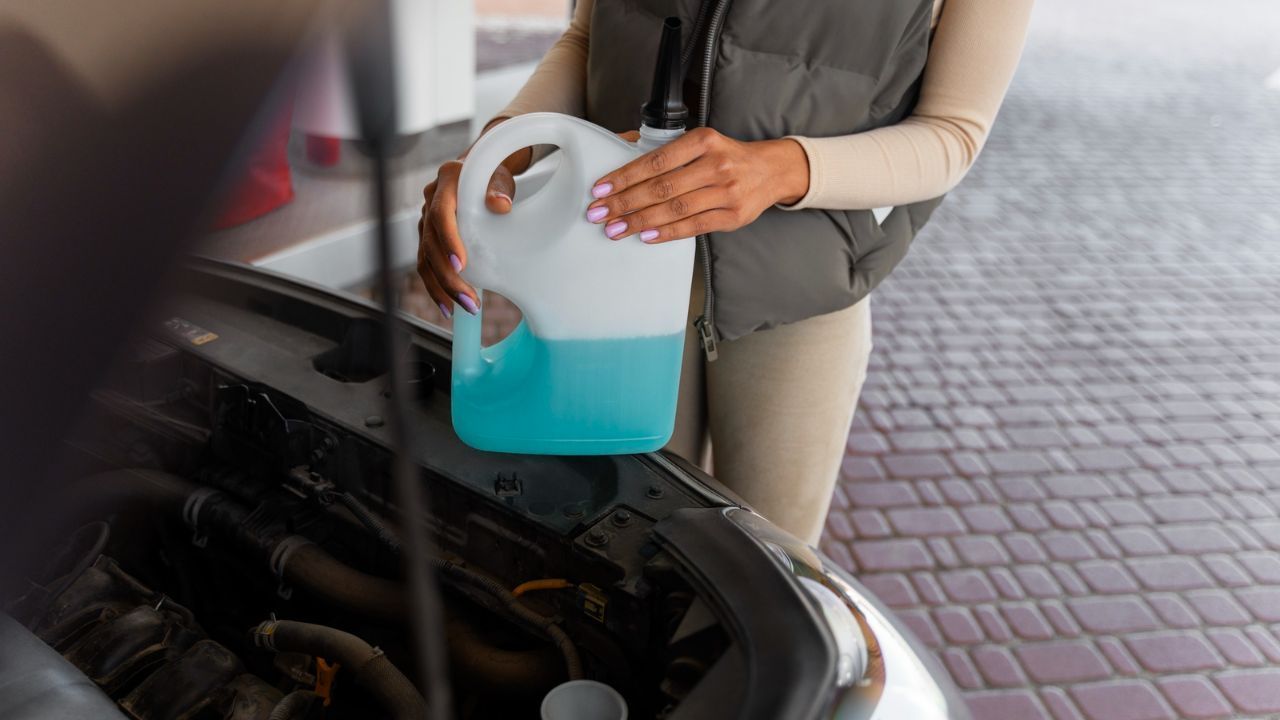
Woman pouring blue windshield washer fluid into a car's reservoir under the open hood.

Low coolant is one of the most common reasons an engine runs too hot. Coolant takes heat away from the engine. It then carries that heat to the radiator. The radiator releases the heat into the air.


When the coolant level drops, this process cannot work well. A leak may be the reason. It can come from a hose, radiator, gasket, or another cooling part. AAA notes that low coolant often points to a leak in the cooling system.


Look for these clues:

  • A sweet coolant smell
  • A puddle under the car
  • A low coolant level
  • Steam from under the hood
  • A temperature gauge that keeps rising


Do not assume that adding coolant fixes the root problem. It may only buy you some time. A leak still needs to be found and repaired.


2. A Faulty Thermostat

The thermostat controls coolant flow through the engine. It opens as the engine reaches its normal working heat. This lets hot coolant move toward the radiator.


If the thermostat gets stuck, coolant may not flow as it should. That can make engine heat rise fast. A useful clue is repeated overheating without an obvious coolant leak. The coolant level may look fine. Yet the engine still runs too hot.


This is one reason guessing can waste money. A proper check can point to the real fault before parts are replaced.


3. A Failing Water Pump


The water pump moves coolant through the engine and cooling system. Think of it as the system's flow engine. Without good coolant flow, heat stays trapped in the engine. A worn pump may leak and may also fail inside without showing a large leak. NAPA notes that worn pump parts can stop moving coolant well. Overheating is a common sign.


You may notice:

  • Overheating that gets worse with use
  • Coolant leaking near the pump
  • A sweet smell
  • Unusual noises near the belt area
  • Repeated coolant loss


A failing pump is not a good problem to ignore. Continued driving can turn a cooling issue into an engine repair.


4. A Damaged Radiator or Cooling Fan


The radiator helps release heat from the coolant. The cooling fan helps move air across the radiator, especially when the car is stopped. That makes this question useful: Does the car overheat more in traffic than on the highway?


If yes, a fan problem may be worth checking. At higher speeds, air moves through the radiator naturally. In slow traffic, the cooling fan becomes much more important. A radiator can also clog or develop damage. Rust, debris, leaks, and damaged parts can reduce its ability to remove heat.


AAA lists radiator and fan problems among common overheating causes. Just don’t put your hands near a running fan. Some fans can start without warning.


5. A Damaged or Loose Belt

Close-up of a person fastening a seatbelt inside a vehicle.

Some vehicles use a belt to drive the water pump. If that belt slips, wears out, or breaks, coolant flow can suffer. This is where belts and hoses deserve attention. Hamilton Tire and Car Care Center offers belt and hose inspection and replacement. The technicians check belts and radiator hoses for wear, cracks, leaks, and tension.


A quick belt check can reveal signs such as:

  • Cracks or visible wear
  • Frayed belt edges
  • Squealing sounds
  • Loose belt tension
  • A belt that has broken


Do not wait for a belt to fail on the road. A small belt problem can become a much bigger repair.


6. Low Engine Oil


Engine oil helps reduce friction between moving engine parts. When the oil level is too low, friction can rise. That can add heat inside the engine. This is also where regular oil care matters. Hamilton Tire and Car Care Center provides oil change service with oil and filter replacement. Its service also includes fluid checks and an inspection for leaks or wear.


Check your oil level as your vehicle maker recommends. Use the correct oil grade for your engine. Never guess the right oil based only on what another car uses.


7. A Blown Head Gasket or Serious Engine Problem


A head gasket helps seal the engine and keeps fluids in the right places. If it fails, coolant can enter areas where it should not be. The engine can then lose coolant and overheat. This is one of the more serious causes of overheating. It can also be costly to repair.


Watch for signs such as:

  • Repeated overheating
  • Ongoing coolant loss
  • White exhaust smoke
  • Milky-looking engine oil
  • Poor engine performance
  • Bubbles in the coolant system


These signs do not prove a failed head gasket by themselves. Other faults can cause similar symptoms. A proper inspection is the safer way to confirm the cause.


What Could Cause Overheating in a Car With Full Coolant?


A full coolant tank does not always mean the cooling system is healthy. The thermostat may be stuck. The water pump may not move coolant well. The radiator may have poor airflow and the cooling fan may also fail.


Air trapped in the cooling system can cause trouble too. In addition, air in coolant lines can slow or stop proper coolant flow. So, do not stop your diagnosis at the coolant tank. If the level looks normal but the gauge keeps climbing, get the system checked.


What Should You Do When Your Car Starts Overheating?


Your first goal is to protect yourself and the engine. Do not try to beat the temperature gauge home.


Take these steps when it is safe:

  1. Turn off the air conditioner.
  2. Pull over in a safe place.
  3. Shut off the engine.
  4. Keep away from hot steam.
  5. Let the engine cool before checking fluids.
  6. Do not remove a hot radiator cap.
  7. Get help if the problem continues.


AAA advises drivers to stop and let the engine cool before checking coolant. If overheating continues, professional help or a tow is the safer choice.


Can You Drive a Car That Is Overheating?


It is best not to keep driving an overheating car. A short drive can still turn a cooling problem into serious engine damage. You may feel tempted to say, “It only happens sometimes.” That is exactly when caution matters. Overheating can return without much warning. If the gauge reaches the hot zone, a warning light appears, or steam comes from the hood, stop when safe. 


Need Help With an Overheating Car?


If your car keeps running hot, do not wait for the problem to get worse. The team at Hamilton Tire and Car Care Center in Baltimore can inspect your cooling system, check belts and hoses, and find the cause of the overheating. Their ASE-certified technicians can also handle oil changes and other needed maintenance to help keep your engine running safely.


Schedule an inspection with Hamilton Tire and Car Care Center today and get your overheating problem checked before it turns into costly engine damage.


FAQs 

Q1: What could cause overheating in a car?

Low coolant, leaks, thermostat failure, radiator trouble, fan failure, water pump problems, belt issues, and low oil can cause overheating. A failed head gasket can also cause serious heat problems.

Q2: Why is my car overheating but the coolant is full?

A full coolant tank does not rule out a cooling fault. A bad thermostat, water pump, radiator, or cooling fan can still cause overheating.

Q3: Can low oil cause a car to overheat?

Yes. Low oil can increase friction between moving engine parts. That can create more heat and contribute to overheating.

Q4: Why does my car overheat at idle?

A cooling fan problem can be one possible cause. At idle, the car gets less natural airflow through the radiator. The fan must help move air through the cooling system.

Q5: Is an overheating car safe to drive?

Generally, no. Continued driving can cause severe engine damage. Pull over safely, shut the engine off, and seek professional help if the problem continues.
By jkram200 September 16, 2026
Discover 9 warning fuel pump symptoms, including hard starting, whining, stalling, and power loss. Learn when your car needs immediate attention.
By jkram200 September 16, 2026
Find out how long a car inspection takes and discover 8 quick tips to avoid delays, prepare your vehicle, and make your inspection visit easier.
By jkram200 September 11, 2026
Review the Maryland state inspection checklist, learn which vehicles need inspection, what mechanics check, and how to prepare your car to pass.
By jkram200 September 11, 2026
Compare air filter vs cabin air filter differences, functions, warning signs, and replacement needs to keep your engine and cabin air clean.
By jkram200 September 11, 2026
Learn common catalytic converter symptoms, what causes failure, and when a clogged or damaged converter may need professional repair or replacement.
By jkram200 September 1, 2026
Discover 8 symptoms of a bad brake caliper and proven solutions. Learn how sticking pistons, damaged seals, and seized pins affect braking.
By jkram200 September 1, 2026
Discover 9 signs your car needs an alignment, from uneven tire wear to pulling and crooked steering, before the damage becomes expensive.
car-wont-start-clicking-noise
By jkram200 September 1, 2026
Car won’t start clicking noise causing concern? Discover 7 causes, quick checks, and proven fixes for battery, starter, and electrical problems.
car-makes-noise-when-turning
By jkram200 August 12, 2026
Discover 8 serious reasons your car makes noise when turning, from worn CV joints to steering problems, plus warning signs and practical fixes.
By jkram200 August 12, 2026
Learn when to replace a car battery, spot 6 urgent warning signs, understand its average lifespan, and avoid an unexpected roadside breakdown.
Show More