1. Serpentine Belt vs Timing Belt: Different Jobs
The serpentine belt uses engine power to drive several accessories. These often include the alternator and air conditioning compressor. Some cars also use it for power steering or cooling. The exact parts it drives depend on your engine.
The timing belt links the crankshaft and the camshaft, or camshafts. This keeps the pistons and valves moving at the right times. Think of it as keeping the engine on the beat. A loss of timing can stop the engine or damage parts.
This timing belt vs serpentine belt distinction explains why both deserve attention. One supports key systems that help your car function. The other controls the timing needed for combustion. Neither belt can take over the other belt’s job.
2. They Sit in Different Places
You can often see the serpentine belt beneath the hood. It winds around pulleys on the outside of the engine. Access varies, so some belts are harder to spot. Keep hands, clothes, and tools clear of moving parts.
A timing belt usually sits behind a protective engine cover. You generally cannot judge its condition with a quick glance. Seeing a fresh outer belt proves nothing about the hidden one. That matters when you inspect a used car before buying.
Ask the seller for dated receipts with the mileage shown. A vague claim that “the belts were done” lacks detail. Check which belt was replaced and which engine the receipt describes.
3. Their Surfaces Have Different Shapes
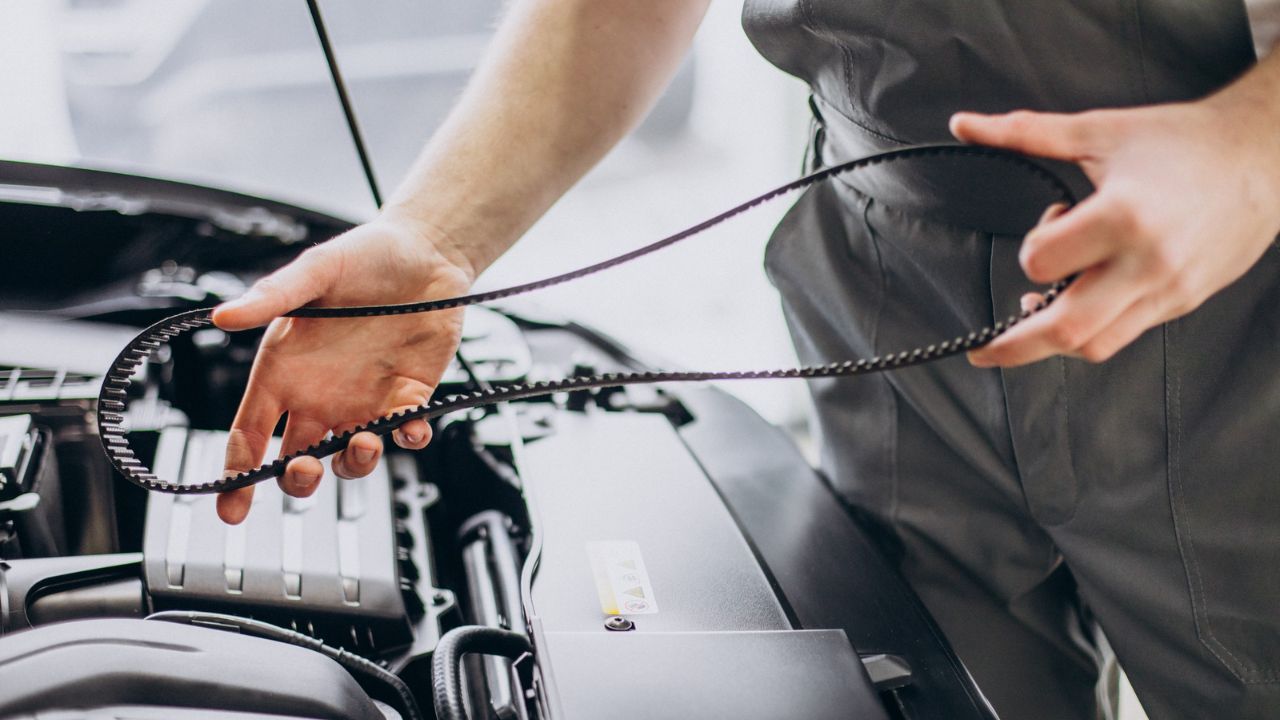
A serpentine belt usually has several ribs running along its length. Those ribs grip matching grooves in the accessory pulleys. A timing belt has teeth that engage matching sprockets. Those teeth help hold precise timing as the engine turns.
That design difference makes these belts unsuitable substitutes for each other. Length alone cannot tell you whether a replacement fits. Width, rib count, tooth shape, and engine fit also matter. Order parts using the exact vehicle and engine details.
For a quick serpentine vs timing belt comparison, remember these points:
- Serpentine belt: Lengthwise ribs help turn the engine’s accessory pulleys.
- Timing belt: Teeth keep the crankshaft and camshaft moving together.
- Correct fit: The year, model, and engine determine the required part.
4. Their Warning Signs Differ
A worn accessory drive may chirp or squeal during use. But the belt itself is not always the cause. A weak tensioner, poor alignment, or failing pulley may contribute. Replacing the belt alone can leave the real fault unresolved.
Watch for frayed edges, missing ribs, or signs of contamination. Some modern belts lose rib material without showing many cracks. A belt that looks smooth and intact may still need work.
A timing belt may fail without a clear warning beforehand. Therefore, do not rely on a ticking sound to identify trouble. Engine noises have many causes and need proper diagnosis. A quiet engine does not prove its timing belt is safe.
When booking a check, share details that help narrow the fault:
- When it happens: Note whether noise starts with a cold engine.
- What changes: Mention whether switching on the air conditioning affects it.
- What you see: Report warning lights, leaks, or rising engine temperature.
- Recent work: Tell the shop about any recent belt or pulley replacement.
5. Serpentine Belt vs Timing Belt: Failure Risks
A broken serpentine belt can stop the alternator from charging and steering may become much harder if it drives a hydraulic pump. The engine may overheat if that belt drives its water pump. These effects depend on how your car is built.
A broken timing belt can cause the engine to stop. In an interference engine, pistons and valves can then collide. That can bend valves and lead to major repair work while other engine designs may avoid that contact, but still leave you stranded.
The serpentine belt vs timing belt debate should never become a risk contest. Both failures can leave you stuck in an unsafe place. Pull over safely if temperature rises or steering changes suddenly. Shut off the engine and arrange help when belt failure is suspected.
Use these steps if trouble begins while you are driving:
- Find safety: Move out of traffic as soon as conditions allow.
- Stop driving: Do not push on with an overheating engine.
- Get help: Arrange roadside assistance when the belt breaks or comes off.
- Avoid restarts: Do not keep cranking an engine with suspected timing failure.
6. Replacement Work and Schedules Differ
Serpentine belt replacement is often simpler because access is easier. Timing belt work usually requires more parts removal and precise setup. That extra labor often makes the timing belt job costlier. Still, prices vary widely by engine and repair scope.
There is no single mileage limit that fits every car. You need to follow the manufacturer’s schedule for your exact engine. Check both mileage and age limits when the schedule lists them. A low-mileage car can still reach its time limit.
Timing belt service may include tensioners, idlers, and related hardware. A timing-belt-driven water pump may also be replaced during that work. Shared labor can make this sensible when the service procedure supports it. Ask the shop to explain each part in the quote.
Serpentine Belt vs Timing Belt: Choosing the Right Service
Start with the service history, rather than guessing from sound. Find your owner’s manual and check the maintenance schedule. If records are missing, ask a shop to confirm the engine’s requirements.
Picture buying a used car with a spotless engine bay. The seller points to a new serpentine belt as proof of care. That is useful, but it does not document timing belt service. Ask for the specific receipt before treating the job as complete.
Baltimore drivers can book
Hamilton Tire & Car Care Center’s
Belts and Hoses service.
The shop lists inspection and replacement for serpentine and timing belts. It is located at 5619 Harford Road, Baltimore, MD 21214. Bring your service records and describe any noise or warning lights.
Know Which Belt Needs Attention Before You Approve Repairs
The practical answer to serpentine belt vs timing belt starts with purpose. Learn which belt your quote covers and why service is due. Follow the correct schedule, and address new symptoms promptly. A clear explanation today can prevent a roadside scramble tomorrow.
FAQs
Q1: Is a serpentine belt the same as a timing belt?
No, these belts perform different jobs within the engine system. The serpentine belt drives accessories through a series of pulleys. The timing belt keeps internal engine movement in sync. Replacing one does not renew the other belt.
Q2: Do all cars have a timing belt?
No, many engines use a timing chain instead of a belt. Some models offer different engines with different timing systems. Check your engine details in the manufacturer’s service information. Chains also need proper maintenance and can develop faults.
Q3: Can I drive with a squealing serpentine belt?
A squeal needs diagnosis because several drive parts can cause it. Arrange a prompt inspection instead of waiting for the sound to worsen. Stop safely if steering changes or the engine overheats. The right next step depends on the actual fault.
Q4: Should both belts be replaced at the same time?
Only when their condition or service schedules justify the work. The belts do not automatically share a replacement interval.