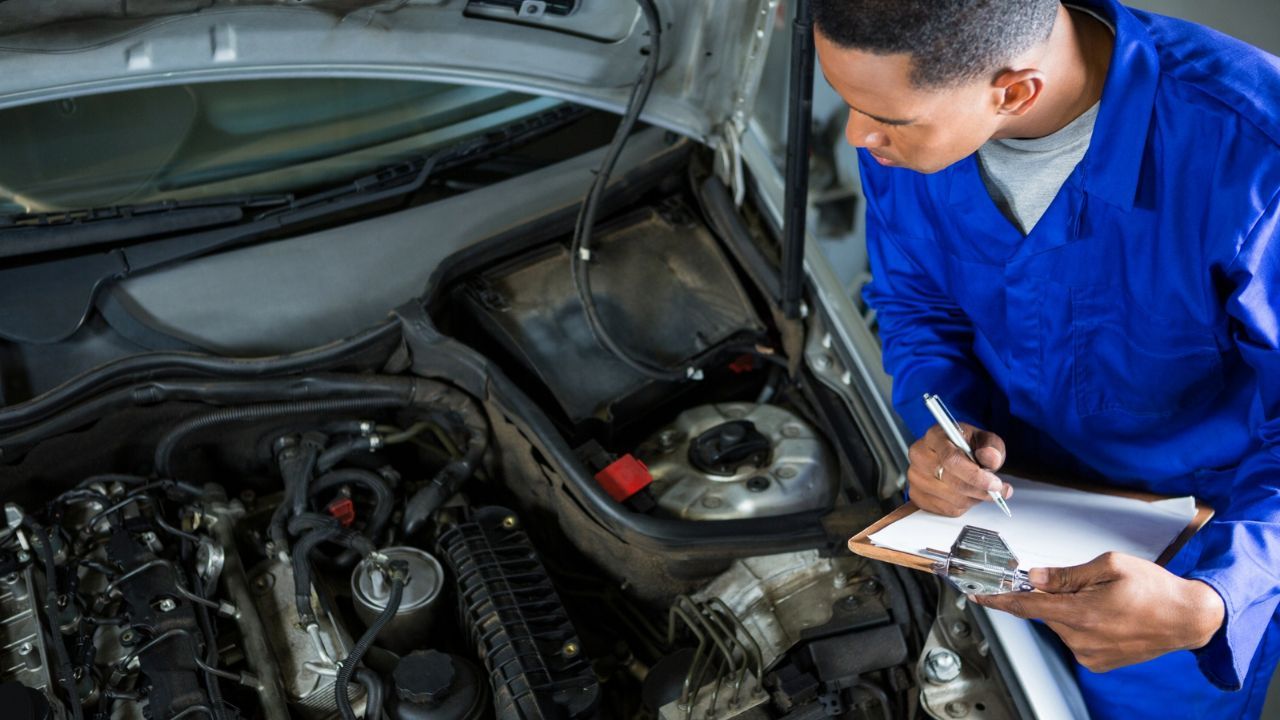
The symptoms of CV joints going bad include clicking, clunking, shaking, and grease leaks. A torn protective boot is another warning worth checking. These clues call for an inspection, not a guess and catching the cause early helps you choose the right repair.
Picture a slow turn into a Harford Road parking space. You hear a sharp click, then several more clicks. The car still moves, so you finish your errands. But that new sound deserves more than a louder radio.
The symptoms of CV joints going bad can overlap other faults. Tires, wheel bearings, and loose mounts can cause similar complaints. This guide explains what to notice and what comes next.
What Does a CV Joint Do?
CV stands for constant velocity, which describes smooth power transfer. These joints let a driven axle turn through changing angles. They work as the wheels steer and the suspension moves. Front-wheel-drive cars use them, as do many other vehicle layouts.
Think of the joint as a moving link in the drivetrain. The outer joint works near the wheel on typical front axles while the inner joint accommodates movement closer to the transmission.
Each joint has a flexible cover called a CV boot. This cover holds grease inside and keeps road grit out. Once that seal fails, the joint loses vital protection. A small tear can become a much larger repair concern.
5 Symptoms of CV Joints Going Bad
When tracking symptoms of CV joints going bad, note the pattern. Does it happen on turns, under power, or while coasting? Share those details when you speak with the repair shop. They help narrow the search before any parts come off.
1. Clicking or Popping During Turns
Repeated clicking on a slow turn suggests outer joint wear. You might hear it while entering a driveway or parking. Note whether it happens each time or only now and then. One isolated pop does not prove a joint is bad. Also, resist the urge to make tight circles to test it. A technician can assess the noise in a controlled setting. Your job is to describe what happens during normal driving.
Tell the shop about these details:
- The turn: Does the sound occur turning left, right, or both?
- The pace: Does it show up during slow parking moves?
- The pattern: Do several clicks follow each other through the turn?
- The change: Has the noise grown louder since you first noticed it?
2. Shaking When You Press the Gas
A worn inner joint can cause shuddering under acceleration. You may feel a shake through the floor or seat. Note whether it eases when you lift off the gas. That change gives the technician a useful clue about load.
But a shake alone is not a sound diagnosis. Bad engine mounts and other drivetrain faults can feel similar. Speed-related shakes often suggest tire or wheel faults. Avoid buying an axle based on a shake alone.
When describing the problem, include:
- When it starts: Pulling away, climbing a hill, or gaining speed.
- Where you feel it: The seat, floor, steering wheel, or elsewhere.
- What changes it: Easing off the gas, braking, or changing pace.
- Recent work: Mention new tires, axle work, or a recent impact.
3. Clunking as Power Changes
Excess movement in a joint can cause a clunk. It may happen as you accelerate or ease off. Some drivers notice it when shifting into drive or reverse while other worn drivetrain parts can make much the same noise.
Do you hear one dull knock when leaving your driveway? Tell the shop whether the car also gives a jolt. Avoid shifting back and forth just to repeat the sound. Let the inspection establish which part has too much movement.
Track the symptoms of CV joints going bad with these notes:
- Gear changes: Say whether the clunk follows selecting drive or reverse.
- Pedal changes: Note any knock when pressing or releasing the gas.
- Other conditions: Mention whether bumps also cause the same sound.
- Progress: Note when it began.
4. Grease Around the Inside of a Wheel
A leaking boot can leave grease near the affected wheel. A spinning axle may fling it onto nearby surfaces. This is a warning about lost protection around the joint. It does not, by itself, prove the joint has worn out.
You might spot the mess while washing a wheel. Therefore, take a photo from a safe spot and avoid reaching behind moving parts or touching hot brake parts. Ask the shop to identify the source before cleaning it away.
Look for these visible clues:
- Fresh splatter: Thick grease on the inner wheel or nearby parts.
- A repeat mess: Grease that returns after the area was cleaned.
- An apparent leak: A wet patch near the boot or clamp.
- Added noise: Tell the shop if clicking starts alongside the mess.
5. A Split or Damaged CV Boot
A torn boot can be silent, making it easy to miss. Its folds may hide a crack from a quick glance. Loose clamps can also let the protective seal fail. This is an early warning, rather than proof of joint failure.
Why act if the car still drives just fine? The boot shields parts that depend on clean grease. Grit and moisture threaten that protection once the cover opens. An inspection can show whether a boot repair remains suitable.
Have the shop check for:
- Split folds: Cracks or openings in the flexible boot material.
- Loose clamps: Fasteners that no longer hold the boot securely.
- Lost grease: Signs that lubricant has escaped from the joint.
- Internal wear: Damage that makes a new boot alone unsuitable.
What Should You Do When These Signs Appear?
Recognizing the symptoms of CV joints going bad starts the process. The next decision is whether the car should move. No online checklist can confirm that your vehicle is safe. Call the shop, explain the signs, and ask about transport.
Use this approach to plan your next step:
- New clicking or mild shudder: Arrange a prompt inspection and discuss driving safety.
- Visible boot damage: Book a check even if no noise is present.
- Severe shaking or harsh grinding: Stop somewhere safe and arrange a tow.
- Sudden loss of drive: Stop trying to move and request roadside help.
Do not crawl under a car supported by a jack alone. You also do not need a home road test. Photos and notes can give the shop a useful starting point. Let a trained technician handle the checks beneath the vehicle.
Does the Boot, Joint, or Whole Axle Need Replacement?
A damaged boot does not always require a whole axle. If caught early, the joint may still be serviceable. A technician must check its condition before recommending that route. Also, a new cover cannot undo wear already inside the joint.
When comparing quotes, ask what each repair actually includes. A boot repair and a complete axle are different jobs. Parts, labor, and vehicle design affect the final price. Choose based on the findings, rather than the lowest number.
Get Drivetrain Service in Baltimore
Hamilton Tire and Car Care Center lists
drivetrain service and repair.
The shop is at 5619 Harford Road in Baltimore, Maryland. Call 410-426-2220 to discuss the signs and arrange service. Explain when the noise or shake appears during your drive.
The symptoms of CV joints going bad deserve a clear diagnosis. Clicking, shaking, and clunks help guide the inspection process. Boot tears and grease leaks deserve attention before noise develops. Book a check so your next decision rests on evidence.
FAQs
Q1: Can you drive with a bad CV joint?
A failed joint can leave the vehicle unable to move. There is no safe mileage promise for a worn one. Ask a technician whether to drive in or arrange towing.
Q2: What does a bad CV joint sound like?
Common bad CV joint symptoms include repeated clicking during turns. A clunk during changes in power can also occur. Sounds overlap with other faults, so inspection still matters.
Q3: Can a CV joint cause vibration at highway speeds?
Some faulty CV joint symptoms include shaking under acceleration. Shaking that mainly follows speed often involves tires or wheels. Tell the shop what changes when you release the gas.
Q4: Can a torn CV boot be repaired without replacing the axle?
Sometimes, if inspection shows the joint remains in good condition. Contamination or wear may make a larger repair necessary. Ask what the technician finds inside before choosing either option.
Q5: Will replacing the boot stop a clicking CV joint?
A new boot cannot restore worn internal joint surfaces. The cause of the clicking needs to be confirmed first. Why pay for a cover before checking what it protects?