A weak battery is the first thing to check. It may have enough power for the dash lights. Yet, it may not have enough strength to crank the engine. This often happens after a light stays on overnight. Long periods without driving can also drain a battery as old batteries may fail with little warning, especially during sharp weather changes.
Signs of a weak battery include:
- Fast, repeated clicking
- Dim headlights or cabin lights
- A slow engine crank before the failure
- Power windows that move more slowly
- A battery more than three years old
- Clock or radio settings that reset
A healthy resting battery commonly reads about 12.4 to 12.7 volts. However, a lower reading does not always mean the battery is bad. It may simply need a full charge and further testing.
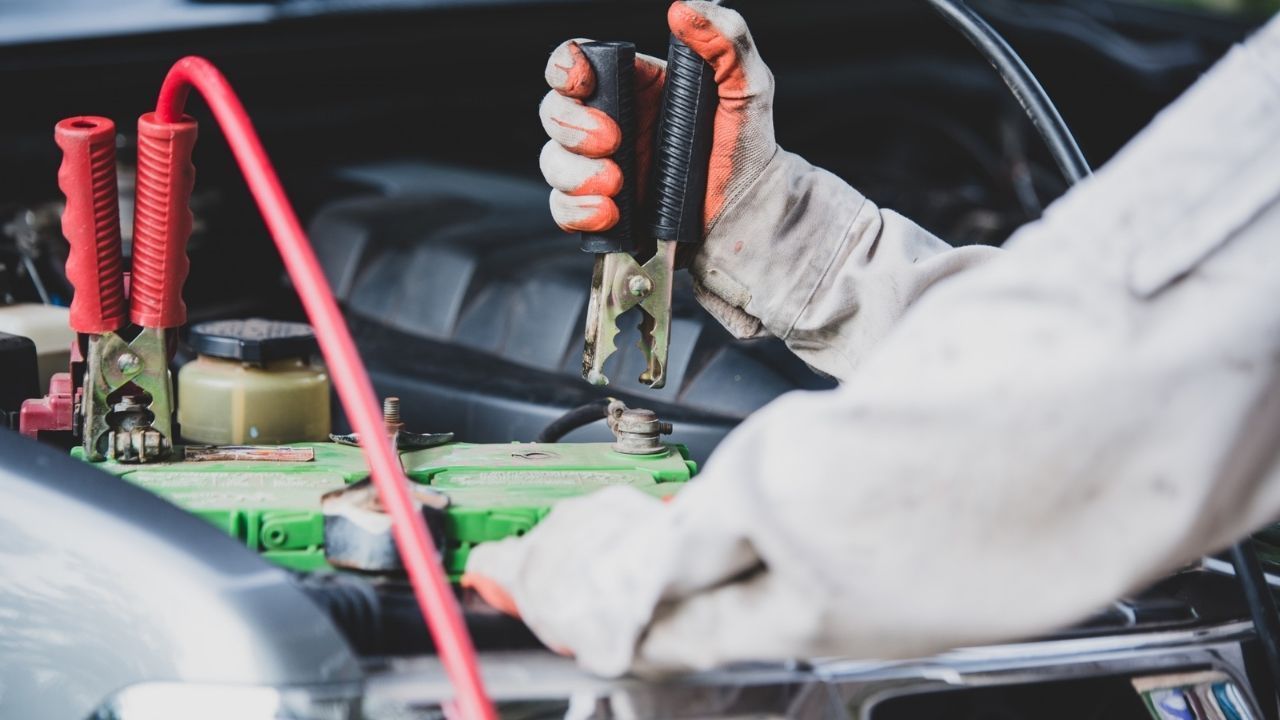
The fix: Try a safe jump-start if the battery is not damaged. Follow the steps in your owner’s manual. If the engine starts, get the battery and charging system tested soon.
2. Loose or Corroded Battery Connections
The battery can be healthy while its connections block current. Loose terminals create resistance between the battery and starter. White, blue, or green buildup can cause the same issue. This fault often comes and goes and the car may start well one day, then only click the next morning. A bump or change in temperature may alter the connection.
Look for these warning signs:
- Terminals that move by hand
- Powdery buildup around either battery post
- Frayed or cracked battery cables
- Headlights that flicker when starting
- Electrical power that cuts in and out
The fix: Turn the car off before inspecting the battery. Do not touch leaking, swollen, hot, or cracked batteries. A technician can clean the posts, tighten the clamps, and test each cable.
3. Faulty Starter Motor or Solenoid
The starter uses battery power to turn the engine. Its solenoid acts like a heavy-duty electrical switch. If either part fails, you may hear one clear click. Here is a common decision point. The lights stay bright, and a jump makes no difference. In that case, the starter becomes a stronger suspect.
The fix: Have the starter circuit tested under load. A shop should check power, ground, and signal flow first. Replace the starter only after those checks rule out cable faults.
4. Bad Ground Cable or Engine Ground
Electric current needs a clean return path to the battery. The negative cable and engine ground straps provide that path. Rust, loose bolts, or damaged wire can break it. This issue may look just like a dead battery. Lights may work because they need little power but the starter needs far more current, so it clicks instead.
The fix: A technician can perform a voltage-drop test. This finds resistance that a quick visual check may miss. Damaged cables or ground straps should be cleaned, tightened, or replaced.
5. Failing Alternator
The alternator charges the battery while the engine runs. When it fails, the car uses stored battery power until that supply runs out. The next start may bring rapid clicking and no engine movement. An old battery and a bad alternator can also fail together. Which is why replacing only the battery may lead to another breakdown. That is why both parts should be tested before repairs begin.
The fix: Test the alternator’s output and the battery’s ability to hold charge. Repair loose belts or wires if they caused the fault. Replace the alternator when it cannot provide proper output.
6. Faulty Starter Relay, Ignition Switch, or Safety Switch
The key or start button sends a request through several parts. These may include a fuse, relay, ignition switch, and safety switch. One failed link can stop power before it reaches the starter.
Automatic cars usually have a park or neutral safety switch. However, manual cars use a clutch pedal switch. These parts help prevent the car from starting while in gear. Try moving an automatic shifter firmly into Park. Then try Neutral with your foot on the brake. If the car starts in one position, the safety switch or shifter link needs inspection.
The fix: Check the right fuse only if you can identify it safely. Never replace it with a higher-rated fuse. A shop can test the relay, switch, and starter control circuit.
7. Seized Engine or Locked Accessory
A seized engine will not rotate, even if the starter works. The starter may strike once and produce a loud click. Low oil, severe heat, or an internal engine fault can cause seizure. A locked pulley or accessory may also stop the belt and crankshaft. Do not keep trying the key if you heard a harsh noise before the car stopped.
The fix: Have the vehicle towed for inspection. A technician can try turning the engine by hand and check the attached parts.
What Should You Do First?
When the car won’t start clicking, noiseclicking noise begins, pause and look for clues. A calm two-minute check can prevent wasted time. It may also keep you from making the fault worse.
Use this order:
- Turn off all accessories: Switch off the lights, fan, radio, and charger.
- Check the gear position: Select Park or Neutral and try once.
- Watch the headlights: Severe dimming suggests weak power or a poor connection.
- Inspect the battery from a safe distance: Look for loose clamps, leaks, swelling, or heavy corrosion.
- Try one safe jump-start: Use the owner’s manual and proper equipment.
- Stop if the jump fails: Repeated starts can harm cables and the starter.
- Arrange testing or towing: This is safest when damage, smoke, heat, or leaks appear.
Never jump a frozen, cracked, leaking, or swollen battery. Keep sparks and flames away from it. If you smell rotten eggs, step back and call for help.
When to Book Professional Service