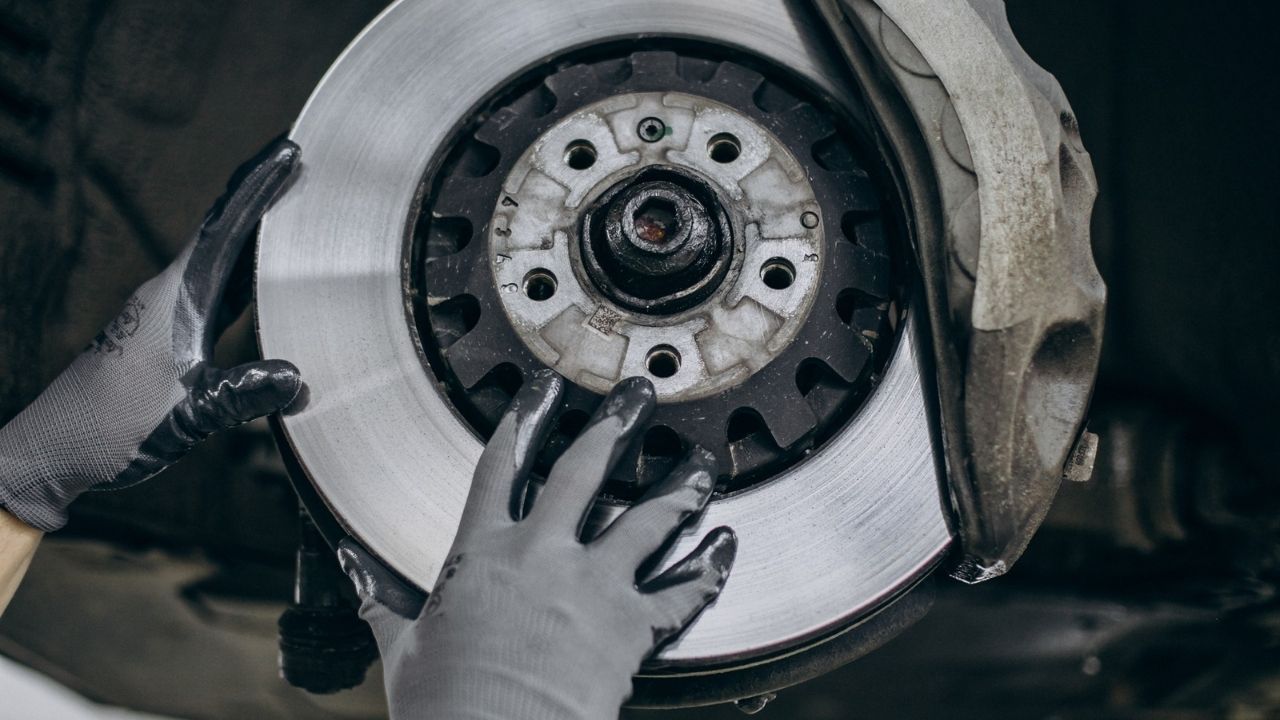
A brake caliper sits over the rotor like a clamp. When you press the brake pedal, fluid pressure moves its piston. The piston then pushes the brake pads against the rotor slowing the wheel.
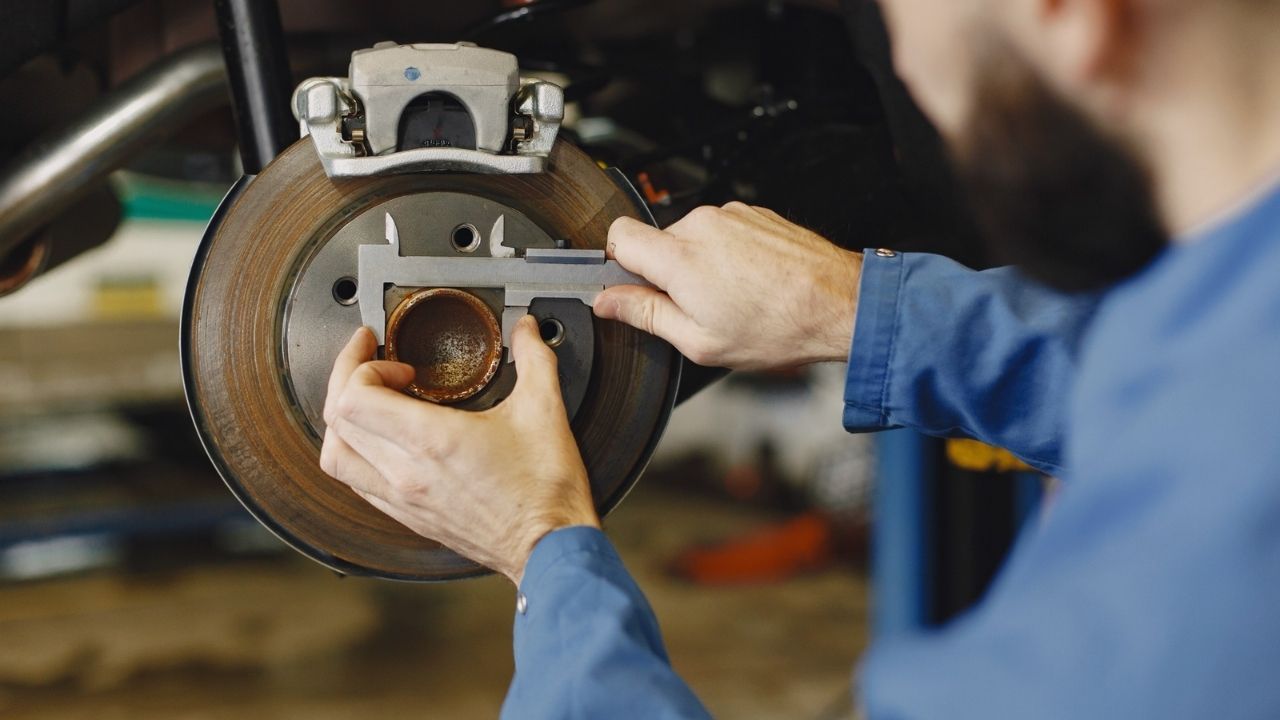
Most caliper trouble starts with a stuck piston, seized slide pins, corrosion, or a damaged seal. A worn brake hose may also trap pressure inside the caliper. Since several faults feel alike, a full inspection matters before replacing parts.
8 Signs of Bad Brake Caliper Parts You Should Not Ignore
Baltimore’s wet winters, road salt, potholes, and stop-and-go traffic can be hard on brakes. Moisture may cause rust around caliper parts and heavy city traffic also creates more heat and wear. That daily grind can turn a small fault into a costly repair.
Here are eight signs focusing on which you can understand if your brake caliper has gone bad.
1. Your Car Pulls to One Side While Braking
A car that darts left or right under braking needs attention. One caliper may not squeeze with enough force. The caliper on the other side then does more work, which can steer the car toward the stronger brake.
A seized caliper can cause the reverse problem. If it stays applied, the car may pull toward the dragging wheel. Yet alignment faults, tire pressure, suspension wear, and dirty brake pads can also cause pulling. A technician must compare both sides before blaming the caliper. But if it happens all the time, the car may also
need a wheel alignment
or tire inspection.
2. One Wheel Feels Much Hotter
A stuck caliper creates constant friction and intense heat. After a normal drive, one wheel may feel much hotter than the others. You may even notice heat rising from that corner. When you witness this, don’t try to touch a hot rotor or caliper with your hand. These parts can cause a severe burn.
Instead, stop in a safe place and let everything cool. A repair shop can measure temperatures without risking an injury.
3. You Smell Something Burning
A sharp, chemical smell near one wheel can mean an overheated brake. The odor may resemble burnt carpet or hot metal. In severe cases, light smoke may rise from the wheel area. If you see this, do not keep driving and hope the smell fades.
Heat can damage the rotor, wheel bearing, brake hose, and nearby seals. It can also make brake fluid boil, which may reduce braking power. If smoke appears, pull over as soon as it is safe. Turn off the car and arrange a tow. Never pour water onto a hot brake because the sudden cooling may damage parts.
4. The Brake Pads Wear Unevenly
Calipers should apply and release the pads in a smooth motion. If the piston or slide pins stick, one pad may remain against the rotor. That pad can become far thinner than the pad beside it. Uneven wear may also appear from one wheel to another.
New pads alone will not solve a seized caliper. The fresh pad may wear down just as fast. The shop must correct the cause before fitting new friction parts.
5. You Hear Squealing, Scraping, or Grinding
A dragging brake often produces a steady squeal while driving. The sound may change when you press the pedal. However, rusted hardware or dry slide pins can also create scraping sounds.
Grinding is more urgent. It may mean the pad material has worn away, leaving metal against the rotor. That contact can damage the rotor within a short drive. You must however know that noise alone cannot confirm caliper failure. Worn pads, bent shields, stones, and damaged rotors can sound much the same. Still, it is one of the clearest signs of bad brake caliper operation when paired with heat or pulling.
6. Brake Fluid Leaks Near a Wheel
A caliper contains seals that hold pressurized brake fluid. When a seal or piston surface fails, fluid may collect inside the wheel. You might see a wet patch around the caliper or on the ground.
Fresh brake fluid often looks clear or pale yellow while older fluid may appear brown. It feels slick, but drivers should avoid handling unknown fluid with bare hands. A leak can lower the fluid level and weaken the whole system and requires professional repair before the car returns to normal use.
7. The Brake Pedal Feels Soft
A soft or spongy pedal may point to air or a leak. If the pedal sinks farther than usual, the car may take longer to stop. That change can feel slight at first, especially during slow city trips.
Caliper damage is only one possible cause. A weak master cylinder, damaged line, old fluid, or failing hose may produce the same symptom. This is why replacing parts based on a guess can waste money.
8. The Car Feels Slow or Hard to Move
A seized caliper may hold the brake on after you release the pedal. But then the car can feel sluggish when pulling away and you may need more throttle than usual to maintain speed.
Some drivers first notice lower gas mileage while others hear the engine working harder on a road they drive each day. The vehicle may also roll poorly when placed in neutral on a flat surface. This symptom often comes with a hot wheel or burnt smell. Stop driving if those symptoms grow worse.
Can You Drive With a Bad Brake Caliper?
Driving with a suspected bad caliper is not a wise risk. The car may pull without warning or need more road to stop. A dragging brake can also overheat during a short trip.
Stop driving and request a tow if you notice:
- Smoke or a strong burning smell
- Fluid leaking near a wheel
- A pedal that sinks toward the floor
- Major pulling when you brake
- Severe grinding or weak stopping power
A faint noise without heat may not require an emergency tow. Still, book an inspection soon. Caliper trouble rarely heals itself, and delays often add pads or rotors to the repair bill.
Proven Fixes for a Bad Brake Caliper
The right fix depends on what failed. A dry slide pin may need cleaning, inspection, and the correct brake lubricant. Damaged boots, heavy rust, a seized piston, or fluid leaks often make caliper replacement the safer choice.
Common repairs include:
- Service the slide pins: Clean and lubricate reusable pins with brake-safe grease.
- Replace the caliper: Fit a quality new or remanufactured unit when it is seized or leaking.
- Inspect the brake hose: Replace a damaged hose that traps hydraulic pressure.
- Replace worn pads: Install pads as an axle set for balanced braking.
- Resurface or replace rotors: Address deep grooves, cracks, or heat damage.
- Bleed the system: Remove air and refill with the specified brake fluid.
- Road-test the repair: Confirm straight stops, proper release, and normal heat.
Some vehicles call for calipers to be replaced in pairs, while others allow one side. The decision depends on vehicle guidance, part condition, and wear on the opposite side. A technician should explain why each part is needed.
Get Brake Service in Baltimore