How to Check Coolant Level in Car: 5 Easy, Essential Steps

jkram200 • November 10, 2026

Learning how to check coolant level in car maintenance starts with one rule: never open a hot cooling system. Hot fluid and steam can spray out under pressure. A quick check is useful, but a burn is not worth the rush.


To check your car’s coolant level, park on level ground, let the engine cool fully, and read the coolant tank’s cold-level marks. Most cars let you see the fluid through the tank. You can often check it without opening a cap. Your owner’s manual shows the right tank and fill range.


Why Your Car Needs the Right Coolant Level


Coolant takes heat from the engine and carries it to the radiator. The right mix also helps guard against freezing and rust. Too little fluid can let the engine get too hot. That can lead to damage and a costly repair.


Baltimore traffic can mean long waits on warm days. Your engine still makes heat when the car barely moves. Coolant matters in winter, too. This is a year-round task. A full tank does not prove that every part works well. A bad pump, stuck thermostat, or failed fan can still cause trouble. The level check is a first step. It does not replace a full check when warning signs appear.


How to Check Coolant Level in Car: What You Need

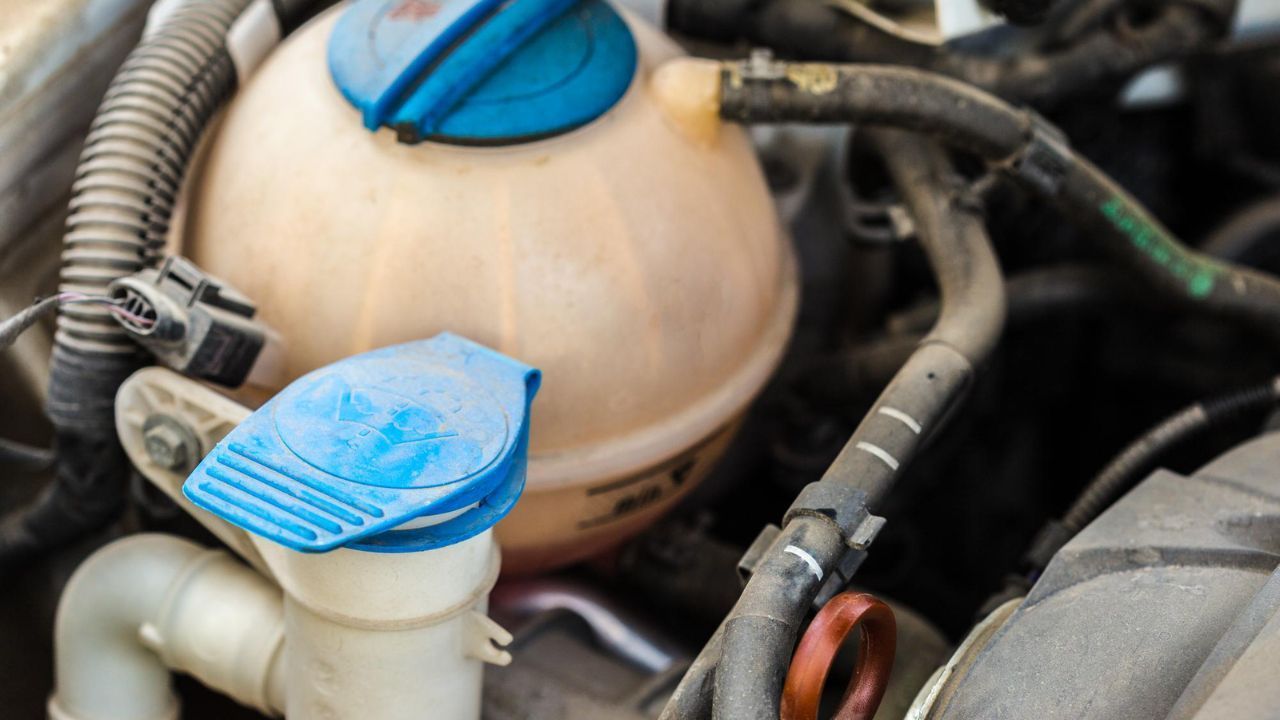
Close-up of a car’s coolant reservoir and windshield washer fluid cap in the engine bay.

You do not need a full set of tools. Start with your owner’s manual and a clear view of the tank. Keep kids and pets away from any spilled fluid. Many coolants are toxic if swallowed.


Have these items ready before you start:

  • Owner’s manual: Find the tank, coolant spec, and fill instructions.
  • Flashlight: See the fluid line through a stained or shaded tank.
  • Gloves and eye protection: Use these if a refill is needed.
  • Correct coolant: Match the exact spec listed for your vehicle.
  • Clean funnel and cloth: Limit spills and wipe up small drips.
  • Phone camera: Record the cold level for a later check.


Some hybrids and electric cars have more than one coolant tank. Their fill rules can differ, and some systems need professional service. Do not assume each tank serves the engine. Check the manual before you touch a cap.


How to Check Coolant Level in Car Safely

Step 1: Park Safely and Let the Engine Cool


Park on flat ground and set the parking brake. Shut off the engine and let it cool fully. A check before the day’s first drive is often easiest. Do not rely on a fixed wait of 15 or 30 minutes. Heat can remain long after the dash gauge drops. Never loosen a radiator cap or pressurized tank cap while hot. Keep hands clear of fans, which may start without warning. Follow all safety notes in your vehicle’s manual.


Use this short safety check first:

  • Choose a level spot away from moving traffic.
  • Switch the vehicle fully off before looking under the hood.
  • Wait until the cooling system is fully cold.
  • Keep loose sleeves, hair, and hands clear of moving parts.


Step 2: Find the Correct Coolant Tank


Open the hood and secure it as the manual directs. Look for a plastic tank linked to the cooling system. It may have a warning on its cap. Labels can include “engine coolant” or a hot-fluid symbol. Do not choose a tank based on cap color alone. The washer fluid tank may sit close by. Pouring coolant into the wrong tank creates a new problem. 


Use the under-hood diagram in your manual to confirm the location. Most modern cars allow a check through the tank wall. Leave the cap closed for that visual check. If the tank is hidden or hard to read, stop guessing. A shop can help confirm the level safely.


Step 3: Read the Cold-Level Marks


Look at the side of the tank for its marks. You may see MIN and MAX, LOW and FULL, or COLD FILL. Compare the fluid line with the cold range in your manual. Read it at eye level for a clear view. Coolant expands as it heats, so a warm reading can mislead you. Always compare readings under the same cold conditions.


Here is how to judge what you see:

  • Inside the cold range: No top-off is usually needed.
  • Below the lower mark: Follow the manual’s refill and inspection guidance.
  • No fluid visible: Seek advice before driving or simply filling the tank.
  • Above the cold maximum: Have excess fluid assessed; do not add more.


Step 4: Add the Right Coolant Only if Needed


Before adding fluid, check the exact coolant spec. Color alone does not show whether two products can mix. A green, pink, or orange shade is not an approval label. The bottle must meet your vehicle’s stated requirements.


Premixed coolant is ready to use at its labeled strength. Concentrate needs the water type and ratio your manual requires. Do not dilute premixed fluid unless the manufacturer directs it. If your manual allows a simple cold-tank top-off:


  • Clean around the cap before removing it.
  • Open it only with the system fully cold.
  • Pour slowly through a clean funnel.
  • Stop at the specified cold fill level.
  • Secure the cap as directed and clean up spills.


An empty tank may mean the system has lost significant coolant. Air may also need to be removed through a model-specific process. Filling the tank alone may leave the engine at risk. Get help rather than starting it just to “see what happens.”


Step 5: Recheck and Watch for Coolant Loss


Take a photo of the cold level after the check. Note the date and any amount you added. Check again before a later drive, with the engine fully cold. A repeated drop deserves attention.


Look for damp spots, crust near hose joints, or a sweet smell. Never taste fluid to identify it. Clear water under the car after A/C use may be normal condensation. Color, location, and smell can offer clues, but they cannot confirm a leak.


When learning how to check coolant level in car care, tracking change matters most. Repeated top-offs can hide a fault for a while. They do not fix the cause.


Can You Drive With Low Coolant?

Close-up of a driver holding the steering wheel with both hands while traveling along a road.

There is no safe mileage limit that fits every car. A small shortage and a major leak are very different problems. Check the manual and get advice if you are unsure. Do not treat a topped-up tank as proof the car is safe.


If the temperature warning comes on, pull over safely and shut off the engine. Do the same for steam or a gauge in the hot zone. Stay clear of escaping steam and leave hot caps closed. Arrange roadside help rather than pressing on.


Stop and seek help for these signs:

  • Steam rises from under the hood.
  • The temperature gauge climbs into the hot range.
  • Coolant drains out or needs frequent refills.
  • A warning stays on despite a correct cold level.


When to Book Cooling System Service in Baltimore


A repeat drop needs a diagnosis, not another bottle in the trunk. Hamilton Tire & Car Care Center offers cooling system service in Baltimore. It offers leak checks, hose inspections, radiator testing, and coolant service. The shop also lists repairs for cooling system faults. 

Book a cooling system inspection if the level keeps falling or warning signs appear. Share your photos and top-off notes with the technician. Those details can help explain when the problem occurs. A small check today can help you spot trouble before the next commute.


FAQs

Q1: Should you check coolant hot or cold?

Check it when the engine and cooling system are fully cold. Heat changes the fluid level and raises pressure. Never remove a hot radiator or pressurized tank cap.

Q2: How to check coolant level in car without opening the cap?

Many cars have a tank you can see through. Compare the fluid line with its cold-level marks. Consult the manual if the tank is hard to read.

Q3: Can you use water instead of coolant?

Plain water is not a routine substitute for the specified coolant. It lacks the proper freeze and corrosion protection. Follow your manual’s emergency guidance and seek help if needed.

Q4: How to check coolant level in the car before a trip?

Check the tank with the engine fully cold before departure. Follow your manual’s routine check schedule, too. Investigate any coolant warning promptly.

Q5: Does low coolant always mean a leak?

Not always, but repeated loss needs a professional check. A recent repair or trapped air may affect the level. 

By jkram200 • November 10, 2026
Learn 8 signs of bad shocks and struts, from bouncing to tire wear. Use this essential guide to spot warning signs and know when to book an inspection.
By jkram200 • November 10, 2026
See seven causes of a battery light on while driving. Learn when to stop, what to check, and how Hamilton Tire & Car Care can help Baltimore drivers.
By jkram200 • October 29, 2026
Learn 5 symptoms of CV joints going bad, including clicking, shaking, and grease leaks. Know when to schedule an inspection and what repair options to discuss.
By jkram200 • October 29, 2026
Compare serpentine belt vs timing belt with 6 key differences. Learn their roles, warning signs, failure risks, and when each belt needs replacement.
By jkram200 • October 29, 2026
How long do rotors last? Learn what affects their lifespan, spot 5 critical warning signs, and know when to schedule a brake inspection or replace worn rotors.
By jkram200 • October 15, 2026
Learn how to follow a car maintenance schedule by mileage or time, know which interval comes first, and understand when early service may be needed.
By jkram200 • October 15, 2026
What does a car tune-up include? Learn about seven essential services, tune-up intervals, warning signs, costs, and what to ask your mechanic.
By jkram200 • October 14, 2026
What is ADAS calibration and why does it matter? Discover when calibration may be needed after windshield, collision, alignment, or sensor repairs.
By jkram200 • October 7, 2026
Learn the ABS light on meaning, 5 common causes, safety risks, and what to do when this critical warning appears on your dashboard.
By jkram200 • October 7, 2026
Learn how often to change a cabin air filter, plus 5 warning signs, mileage tips, and driving conditions that may mean your filter needs replacing sooner.
Show More