6 Easy Ways to Check Engine Oil Dipstick Correctly (Beginner Guide)
Checking your engine oil dipstick is simple, takes under two minutes, and can prevent costly engine damage if done right.
Most people think it’s too complicated and skip it until a warning light pops up. By then, the problem had already started. This guide walks you through exactly how to do it, why it matters, and what decisions to make once you see the reading.
What the Engine Oil Dipstick Actually Does
Your oil pressure warning light is not a low oil alert. It tells you something has already gone wrong. The dipstick is your early warning tool. It shows the oil level before damage begins. That’s why it still exists, even in modern cars full of sensors.
This is a manual check that’s totally under your control. You don’t have to wait or do any guesswork, just a dipstick and a clear reading, and that’s it.
Before You Start - What You Need and How to Prep Your Car
Park on the flattest surface you can find. Oil moves when the car tilts, and even a slight slope can give a false reading. That’s how people think they’re low when they’re not.
Now set up properly. It takes less than a minute.
- Flat ground: Oil settles evenly. This keeps the reading true.
- Engine off for 5-10 minutes: Oil needs time to drain back into the pan. Check too soon, and it looks low.
- Clean cloth or paper towel: You need it to wipe the stick before reading.
- Owner’s manual (optional): Some cars ask for a warm check. Most don’t. Check once, follow it always.
Does it sound like overkill? It’s not. One small mistake changes the reading.
How to Use the Engine Oil Dipstick: 6 Steps
Most people pull the dipstick, glance at it, and move on. That quick check often gives the wrong reading. To get it right, slow down and follow a clear process. Each step has a reason. If you skip one, the result can mislead you.
Here’s how to use the engine oil dipstick the right way, with a bit more detail, so you know exactly what’s happening.
1. Open the hood and locate the dipstick
Start with a cool engine or one that has rested for a few minutes. Pop the hood and secure it. Then, look for a handle that stands out.
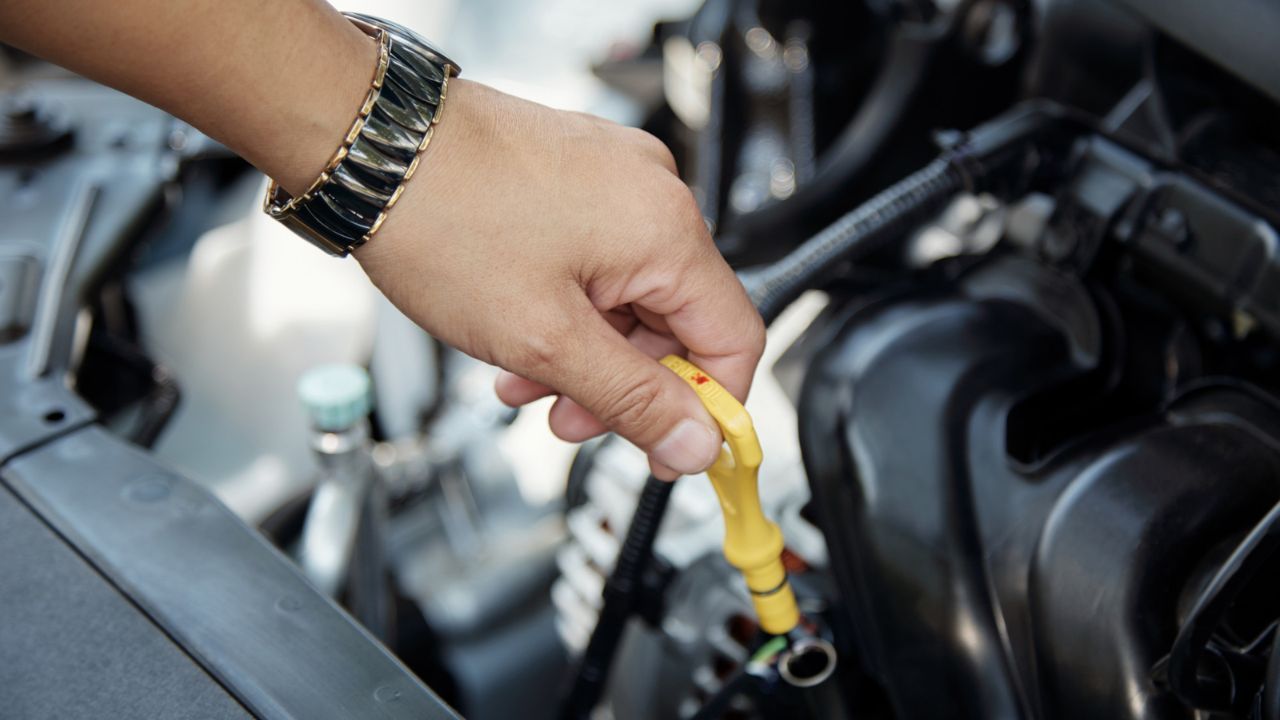
It is usually bright yellow, orange, or red. Car makers do this on purpose so you don’t confuse it with other parts. If you can’t find it, check your owner’s manual. Some engines hide it deeper than expected.
2. Pull the dipstick out slowly
Grip the handle firmly and pull it straight out. Do this in one smooth motion. You might feel slight resistance, but that’s normal. The stick sits snug in a narrow tube to keep dirt out.
As you pull it out, notice how the oil is spread unevenly. This first pull is always messy; that’s why you don’t read it yet.
3. Wipe it completely clean
Take your cloth or paper towel and wipe the entire metal strip. Make sure both sides are clean, as any leftover oil will distort your next reading.
Think of this as resetting the tool. You’re clearing the old trace so the next dip shows the true level.
4. Reinsert the dipstick fully
Slide the dipstick back into the tube gently, and push it all the way down until it seats properly. Here’s where many people go wrong. If you feel it stops halfway, don’t force it. Rotate it slightly and guide it in. The tube often has a slight bend.
If it’s not fully seated, your reading will show low, even if the oil is fine. This step decides accuracy.
5. Pull it out again and hold it level
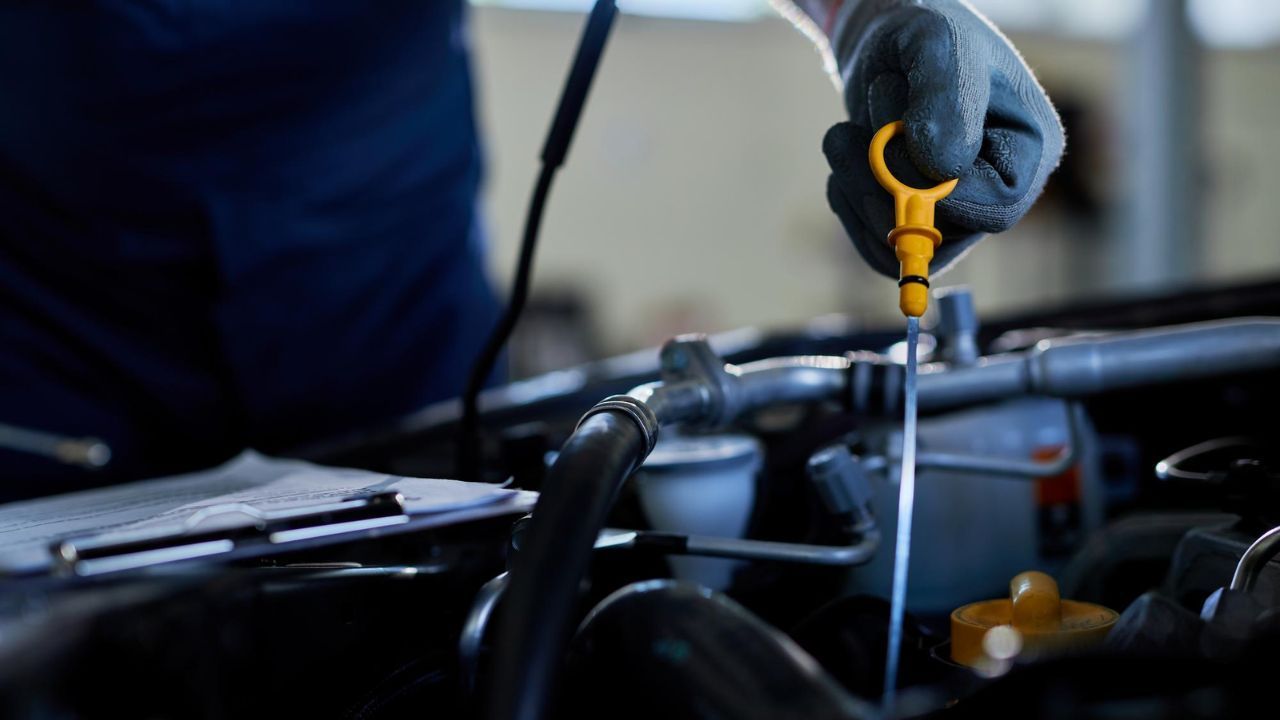
Now remove the dipstick a second time, just like before, and hold it flat and steady. Don’t tilt it upward or downward, as oil can run along the surface and shift the reading.
Look closely at the tip to see a clear oil line this time. That’s your actual level. Take your time when doing this.
6. Read both sides and trust the lower one
Finally, flip the dipstick and compare both sides. Often, one side looks higher than the other. This happens because oil can cling differently as you pull it out.
Therefore, always go with the lower reading. It’s the safer and more accurate one. If the level sits near the minimum mark, add oil soon. If it’s between marks but closer to the top, you’re in good shape.
How to Read Dipstick Markings (They’re Not All the Same)
Not every dipstick looks the same, and the reading is not as simple as “low” or “full.” The key is knowing what your markings mean in real terms.
- MIN / MAX marks: The space between them is usually about one quart. If oil sits near MIN, you need to add some.
- Crosshatched area: Anywhere inside is safe, but aim closer to the top, not the bottom.
- Single notch or dot system: Some cars use minimal markings. In this case, consistency matters more. Check often and track changes.
What the Oil Color on the Dipstick Is Telling You
The color on your dipstick tells you more than the level does. It gives clues about engine health, not just oil quantity.
- Light amber or honey color: Fresh and healthy. No action needed.
- Dark brown or black: Normal over time. Plan an oil change soon.
- Milky or creamy: Coolant is mixed with oil. Do not drive the car as it could be dangerous.
- Gritty or thick texture: Contamination or breakdown. Change oil soon.
Think color doesn’t matter? It does. It’s your first sign that something deeper is wrong.
What to Do If the Level Is Low (and How Much You Should Add)

A low reading is fixable in five minutes, but an overfilled engine is a bigger problem. Therefore, always start small.
Start by adding about half a quart of the correct oil, wait two minutes, and then check again. You can repeat if needed; that’s the safest way. Never dump a full quart unless it’s clearly below the minimum mark. Even then, check after adding.
Also, pour oil into the oil filler cap, and not the dipstick tube. It sounds obvious, but mistakes happen. Remember to secure the cap tightly before closing the hood, as loose caps lead to leaks and a mess.
Why Your Oil Level Keeps Dropping Between Checks
Some oil loss between changes is normal, but a quart every 1,000 miles is not. Modern engines, especially post-2010 models, use less oil than older ones. Even in 2026, you might still see small drops over time.
If you’re adding a quart every 3,000 miles, that’s within a normal range. If it’s every 1,000 miles, something needs attention. Common reasons include worn seals, minor leaks, or oil burning inside the engine. You may not see smoke. That’s what makes it tricky.
So what should you do?
Track it. Write down when you add oil, and watch the pattern. If the drop is fast, get it checked. If it’s slow, just monitor.
How Often to Check Your Engine Oil Dipstick
Check your oil every time you fill your gas tank. At a minimum, once a month. Monthly checks are the baseline. And if you drive often, check more.
In 2026, most service schedules still say monthly, but it is always good and safe to get it checked even more often, especially for older cars. Ignoring it until a warning light appears defeats the purpose.
When to Get Professional Help
Sometimes, checking oil leads to bigger questions. Is the level dropping too fast? Does the oil look strange? Are you unsure what oil to use?
That’s when expert help matters.
At Hamilton Tire Car Care Center, trained technicians handle full oil change services and engine diagnostics. These are just two of the 20+ services they offer, but they’re the most relevant when oil issues come up. A quick visit can confirm if your engine is healthy or if something needs attention.
Final Thoughts
The dipstick is the simplest tool under your hood, yet most drivers ignore it. Check it, read it right, and act on what you see. If the oil is low, add a little, wait, and check again. That loop matters more than anything else.
So next time you open the hood, ask yourself one thing. When did you last check it?
FAQs
1. Can I check engine oil when the engine is hot?
Yes, but only if your car allows it. Most cars prefer a cold check. Always follow your owner’s manual.
2. Why does my dipstick show different levels on each side?
Oil can smear unevenly. Always trust the lower reading for accuracy.
3. Is it okay to drive with oil near the minimum mark?
It’s safe for short distances, but you should top it up soon.
4. What happens if I overfill the engine oil?
Too much oil can cause pressure issues and engine damage. Always add in small amounts.
5. My oil is black. Should I panic?
No. Oil darkens with use, but if it’s very thick or gritty, it’s time for a change.