How Far Can You Drive on a Spare Tire Without Risk? Expert Guide

jkram200 • March 8, 2026

Has your car ever got punctured and you had to use a spare tire? Are you not sure how long you can go in that spare tire? If there’s any confusion, we’re here to help you.


On a spare tire, you can usually drive about 50 miles at no more than 50 mph, but pushing past that limit increases your risk of tire failure, poor braking, and damage to your car’s drivetrain.


Keep reading to know the real answer to how far you can drive on a spare tire.


What Is a Spare Tire?

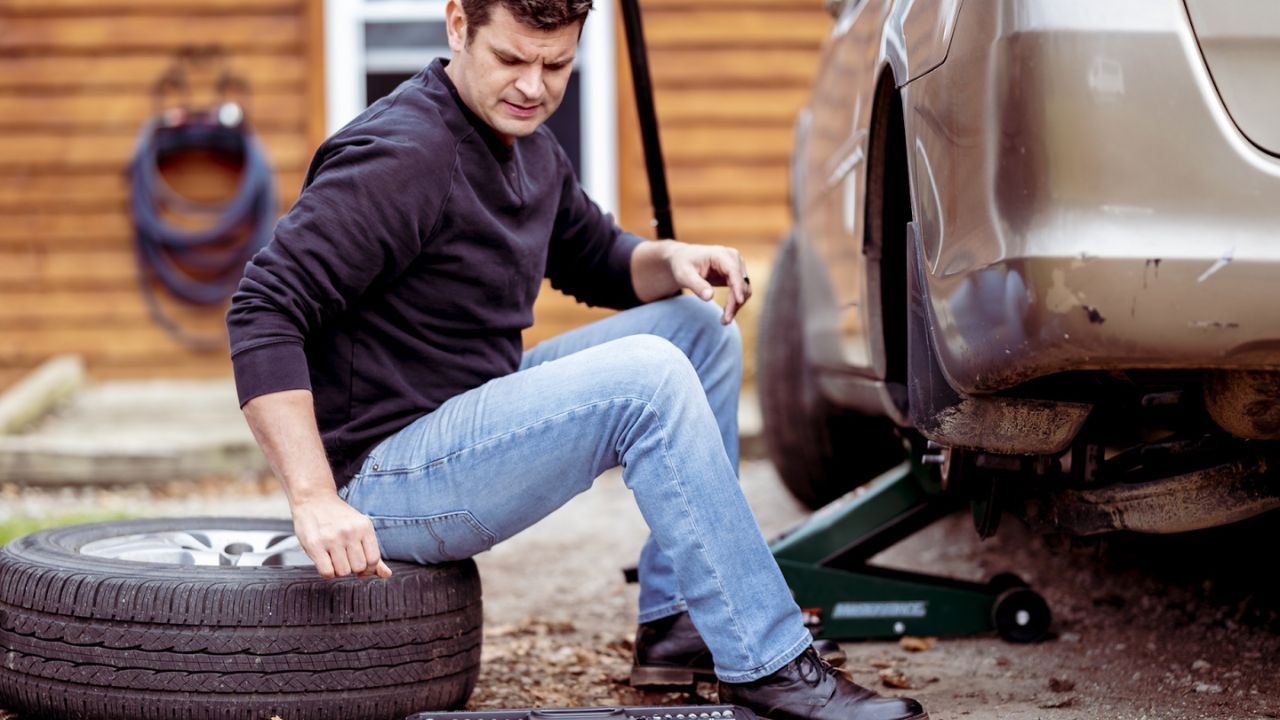
Man kneeling beside a car lifted on a jack, checking a tire with a socket wrench

A spare tire is a backup wheel that sits in your trunk and waits for the day one of your regular tires fails. It is there for emergencies and not for daily driving. This is just to help you get safely from a breakdown spot to a repair shop.


Most cars come with one spare tucked under the trunk floor or mounted underneath the vehicle. Some SUVs carry it on the rear door, and some newer cars do not include one at all, which surprises a lot of drivers the first time they check.


There are three main types of spare tires you might have:


  • Temporary spare, often called a donut, which is smaller, lighter, and designed for short distances at reduced speed.
  • A full-size spare is the same size as your regular tires, allowing for more normal driving for a limited time.
  • A run-flat tire system is not a separate tire, but reinforced tires that let you drive for a short distance after losing air.


A spare tire is not built with the same durability as your main tires, especially the temporary kind. The rubber is thinner, and the tread is shallow. The design mainly focuses on weight savings and emergency use.


Why There’s a Limit in the First Place


Before we talk about how long you can drive on a spare tire, let’s understand why even there is a limit on driving. 


A temporary spare, often called a donut, is not a normal tire. It’s smaller, lighter, and it’s built with thinner rubber. It’s made to get you out of trouble, not to live in your car for weeks.


Most donut spares are designed with:

  • A maximum speed rating of 50 mph
  • A safe distance limit of about 50 miles
  • Lower tread depth
  • Reduced traction in rain or heat
  • Less ability to handle sharp turns or hard braking


It is a short-term solution. Think of it like a crutch. It helps you move, but you would not run a marathon on it.


How Long Can You Drive on a Spare Tire Safely?


The safe window for most drivers is up to 50 miles, sometimes less if road or weather conditions are bad. But here is the part people do not always hear. That 50-mile guideline assumes:


  • The spare is properly inflated
  • The road is smooth
  • The weather is dry
  • You stay under 50 mph
  • Your car is not heavily loaded


If any of those factors change, your safe distance shrinks.


What Happens If You Drive Too Far?


Now let’s talk about the “why.” Why is this such a big deal? Driving too far on a temporary spare can cause:


  • Tire blowout
  • Poor braking response
  • Reduced traction
  • Uneven wear on other tires
  • Damage to your differential
  • Transmission stress, especially in AWD vehicles


And here is something people forget. If you drive an all-wheel-drive vehicle, uneven tire size can cause serious drivetrain damage. That repair bill can run into thousands of dollars.

Suddenly, that short trip to save time does not feel smart.


How to Drive Safely on a Spare


When in an emergency, you cannot put yourself at risk. If you do have to drive with what you have. In that case, here is how to reduce risk.


  • Keep speed under 50 mph
  • Avoid hard braking
  • Take turns slowly
  • Do not overload the car
  • Avoid potholes
  • Check the air pressure before driving
  • Turn off cruise control
  • Avoid long highway stretches


Always remember to drive slowly when driving on a spare tire. 


Signs You Should Stop Immediately


There may be times when you would drive far unknowingly. And not to worry because you will see signs which will tell you that you should halt immediately. If you notice any of these, pull over:


  • Vibration in the steering wheel
  • Wobbling feeling
  • Burning rubber smell
  • Visible bulging
  • Rapid air loss

Ignoring these signs is just like ignoring chest pain which does not end well.


Planning Ahead Saves You Stress

Taking professional help to fix the spare tire

Here is something most drivers never check. The spare tire’s air pressure.


Spare tires often sit unused for years which results in them losing air. When you need them, they may already be underinflated.

Therefore, once a year, check:


  • Spare tire pressure
  • Jack condition
  • Lug wrench
  • Wheel lock key


Many shops include this in routine inspections. Again, services like those offered by Hamilton Tires Car Care Centre often emphasize spare tire readiness during pre-trip safety checks. That extra step can mean the difference between a short delay and a major problem.


Special Note for Electric Vehicles and Hybrids


Electric vehicles and many hybrids often do not come with a spare tire. That surprises a lot of drivers. You open the trunk expecting a donut spare and find a repair kit instead.


Why does this happen? It usually comes down to space and weight.


EVs like the Tesla Model 3 or Nissan Leaf store heavy battery packs under the floor. Manufacturers try to save every pound to improve driving range. A spare tire adds weight, and also takes up valuable storage space. So many brands replace the spare with a tire sealant kit and an air compressor.


That works in some situations, but not all.

It does not work if:

  • The sidewall is damaged
  • The tire has a large tear
  • The wheel rim is bent
  • The tire blew out at highway speed


In those cases, the only solution is a tow.


How to Replace the Flat Quickly


If you are unsure about the steps, here is the basic flow.

  1. Park on flat ground
  2. Turn on hazard lights
  3. Use wheel wedges
  4. Loosen lug nuts before lifting
  5. Raise the vehicle with the jack
  6. Remove the flat
  7. Install spare
  8. Tighten lug nuts in a star pattern
  9. Lower vehicle
  10. Re-tighten nuts


Replacing a flat is a basic skill. Once you do it you get more confidence and the next time it happens, you will not panic. You will step out, grab the tools, and handle it calmly.


The Cost of Waiting Too Long


Driving on a spare feels harmless at first. It feels normal when the car moves, and the steering works. And ultimately you think, “I’ll fix it tomorrow.” That delay is where trouble begins.

  • A new tire
  • A tow bill
  • Suspension repair
  • Differential repair
  • Alignment correction


A basic tire replacement may cost a few hundred dollars. A drivetrain repair can cost thousands. That is the math behind the warning.


Are You Still Driving On Spare Tire?


You asked how long you can drive on a spare tire. The honest answer is just far enough to get out of trouble, not far enough to forget the problem exists.


A spare is a bridge, not a road. And now that you know the risk, is saving an extra hour worth gambling with your safety?

7 Smart Tips to Check Transmission Fluid
By jkram200 March 8, 2026
Learn 7 smart and safe ways to check your car’s transmission fluid level and quality. Avoid costly mistakes and protect your gearbox with simple steps.
How to Jump Start a Car Safely: Simple Guide
By jkram200 March 8, 2026
Learn the safest and most reliable way to jump start a car battery without causing costly damage. Clear steps designed for beginners.
transmission flush cost
By jkram200 February 20, 2026
Get clear insights into current transmission flush pricing. Learn what’s included, what raises the cost, and when it makes sense.
how-to-bleed-brakes-diy-guide
By jkram200 February 20, 2026
Ultimate 10-step DIY brake bleeding guide. Covers helper method vs vacuum, fluid handling, and when you need a shop.
best all season tires
By jkram200 February 20, 2026
Find the top all-season tires worth buying this year. Practical recommendations for everyday drivers who want grip, comfort & durability on all weather roads.
causes-of-gas-leak-in-car
By jkram200 February 16, 2026
From loose gas caps to fuel line damage, here are 9 shocking reasons your car may be leaking gas and how to spot them early.
car-jumps-when-accelerating-causes-fixes
By jkram200 February 14, 2026
Car jumping when accelerating? Discover 7 common causes like spark plugs, fuel delivery, sensors, and easy fixes to restore smooth driving.
10-steps-preparing-car-for-winter
By jkram200 February 13, 2026
Use this complete winter car checklist to avoid breakdowns. Prepare tires, battery, fluids, wipers, lights, and an emergency kit in 10 steps.
check-engine-light-codes-meaning
By jkram200 January 28, 2026
This guide explains common check engine light codes, possible causes, symptoms, and whether it’s safe to keep driving your car.
windshield-wiper-replacement-guide
By jkram200 January 28, 2026
Find out when windshield wiper replacement is needed, the warning signs to watch for, and how to replace blades correctly for clean wiping.
Show More